
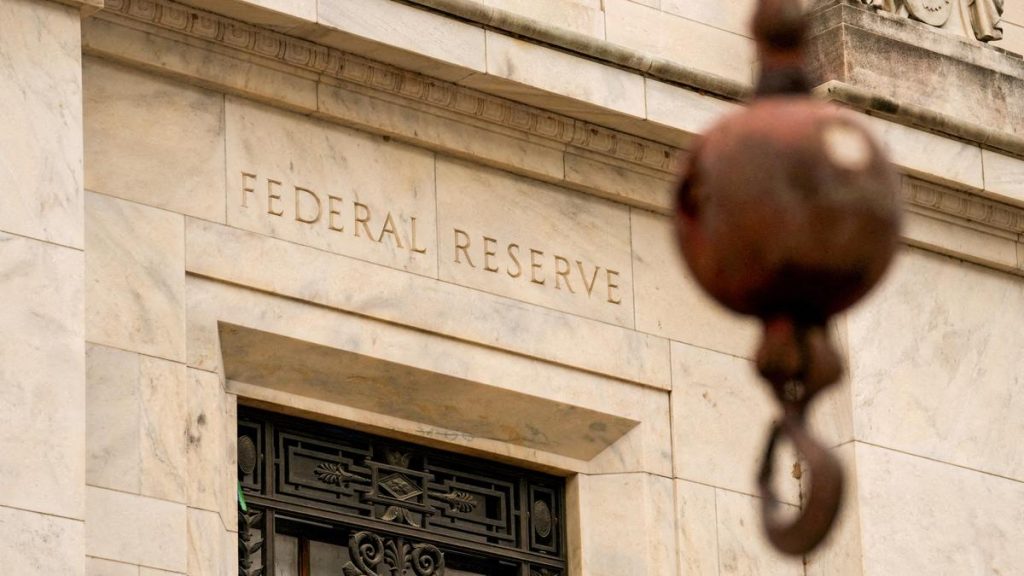
The U.S. Federal Reserve on Wednesday (September 2, 2025) flagged that while the country’s general economic outlook was positive, heightened uncertainty due to high energy prices, policy issues and the Iran war was weighing on industry and household sentiment.
It noted, however, that high inflation had resulted in a great deal of price sensitivity for consumers in general, but with high-end purchases still showing solid numbers.
Economic activity nationwide increased “modestly” since early July, the Fed said in its “beige book” survey of economic conditions, adding that consumer spending also grew slightly. The finding is in line with what economists have dubbed the “K-shaped” economy: a recent trend in the United States that has seen lower-income households reducing spending while higher-income household consumption has grown.
Trump has launched unprecedented attacks on the Fed’s independence since taking office, demanding that it lower rates to spur economic activity, despite the high inflation. High prices and volatile economic performance metrics will be a key issue going into November’s midterm elections for US President Donald Trump, whose Republican Party is seeking to keep control of Congress. The report comes ahead of a meeting of the Fed’s rate-setting committee in mid-September, when markets expect the central bank to raise interest rates in order to combat sustained inflation. Mr. Price surges have been fuelled by Trump’s war in Iran, which has plunged the Middle East into violence as Tehran’s retaliatory action has targeted Washington’s allies and virtually choked a key oil and gas trading route. The St Louis Fed serves southern Illinois and Indiana, western Kentucky, northern Mississippi, parts of Missouri, western Tennessee and all of Arkansas. Overall, input price pressures were high in the manufacturing and construction sectors across multiple Fed districts. Construction activity, too, was concentrated in data centers in several districts.
The Fed has missed its long-term 2% target for inflation for more than five years, and U.S. households have been battered by the high prices. The Fed’s preferred gauge for inflation came in unchanged at 3.7 percent in July, down slightly from its three-year high of 4.1 percent in May.
Last week, Fed Chair Kevin Warsh signalled that there was “work to do” on inflation, adding that he did not see evidence that core trends were moving in the right direction. Prices increased in all 12 of the Fed’s districts, with two-thirds reporting “moderate” increases and the St Louis district seeing a “robust” increase. Manufacturing activity picked up across most of the country, with a concentration in data center-related orders and in the defense sector, the Fed said.
