
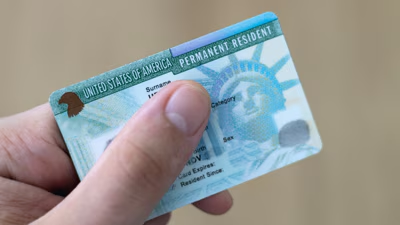
An Indian professional who applies for a US green card today could face a wait of up to 179 years in some categories, according to a new analysis by the National Foundation for American Policy (NFAP). Nearly one million Indians are already stuck in the employment-based backlog, making up 79% of everyone waiting in line. Nationality-based green card caps disproportionately impact Indian professionals, NFAP’s analysis finds, with professionals from China and the Philippines generally facing shorter wait times.
Pandemic-era consulate closures caused a shortfall in family-based visas, and under US law those unused numbers rolled over into the employment categories. NFPA’s analysis argues that these backlogs have made it harder for American companies to attract and retain top Indian talent to live and work in the United States. “In FY 2016, USCIS approved 47,601 applications in the employment-based second preference (EB-2) for Indians, which translates into an estimated 98,594 people once dependents are included, according to NFAP calculations, but only 4,407 people from India were granted permanent residence in the EB-2 category in FY 2016. In other words, in FY 2016 alone, over 90,000 people (principals and dependents) were likely added to the backlog. The pattern holds in 2017 and 2018,” reads NFAP’s analysis. This added roughly 280,000 extra green cards between FY 2020 and FY 2024. Even with this increase, the employment-based green card backlog grew by 20.6% over five years.
“According to a National Foundation for American Policy analysis, a high-skilled foreign national from India with a labor certification application or an employment-based immigrant petition filed in January 2026 or later has a potential wait time for a green card (permanent residence) of 179 years in the employment-based second preference (EB-2), 38 years in the employment-based third preference (EB-3) and 5 years in the employment-based first preference (EB-1),” according to the NFAP’s August policy brief.
