
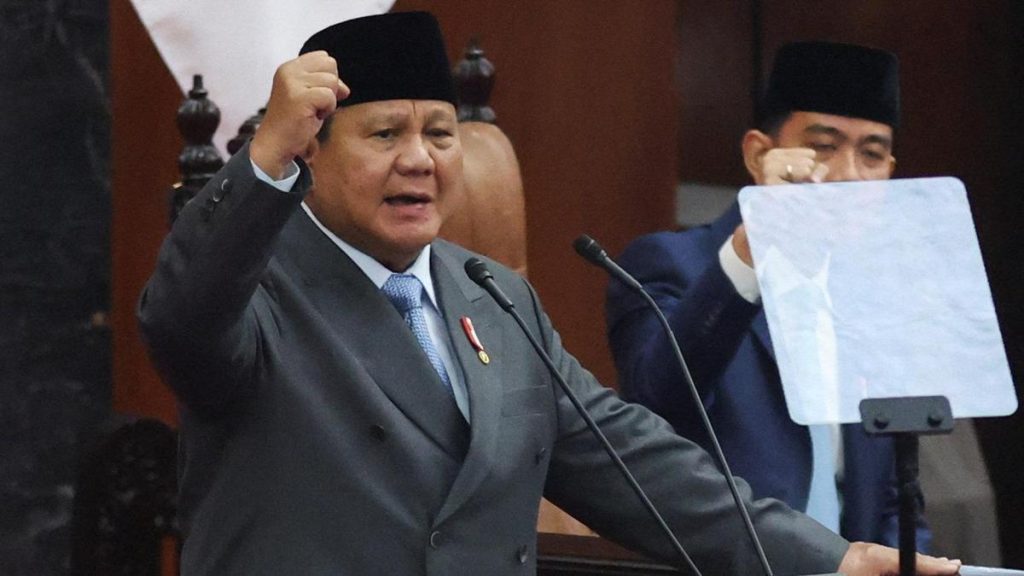
Indonesian legal experts and activists voiced support on Monday (August 31, 2026) for an Indonesian court ruling voiding legal provisions that made insulting the government a criminal offence, but said there were still doubts about the move’s effectiveness.
The provisions were part of Indonesia’s updated penal code, which took effect in January. Their broad definitions drew condemnation from democracy activists concerned they might harm civil liberties and free speech, and put government critics at risk of arrest. Indonesia is the world’s third-largest democracy, but concerns have grown in recent years about the erosion of democratic values under President Prabowo Subianto, who is battling to restore the confidence of the general public, the business community and investors spooked by the economic impacts of his ambitious, populist programmes. The law had defined insults as acts that degraded or damaged the honour of the government, including slander and defamation. It defined the government as including the president, the Vice-President and Ministers.
On Friday (August 28), Indonesia’s Constitutional Court, whose decisions are final and binding, struck down articles that criminalised insulting the government and disseminating such insults, punishable by up to three years in prison. Indonesia’s law minister did not immediately respond to a request for comment on Monday (August 310.
Legal scholar Asfinawati said the ruling was good news, while Made Supriatma, a visiting fellow at the ISEAS-Yusof Ishak Institute in Singapore, said it offers some protection for government critics, though it does not apply to provisions that criminalise insults against individuals.
“All institutions, including state institutions, are legal subjects that do not possess feelings, whether of being praised, criticised or insulted,” the court said in the ruling published on its website on Friday (August 28).
