
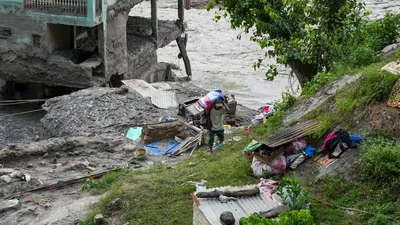
Nepal’s flash floods continue to claim lives, with the toll reaching 788 by Sunday evening. More than 2,500 people are still missing in the floods. 886 people have been rescued, while search and rescue efforts continue, according to Nepal’s foreign ministry. The ministry said 400 foreign nationals are among those reported missing.
The Ministry of External Affairs has released a list of Indian nationals who have been rescued from the affected areas. The team will continue to conduct search and rescue operations in close coordination with the Nepali Army. So far, 149 people have been rescued, the release said, while also providing the names of those rescued.
Nepal’s foreign ministry said its immediate national priority remains clear: to save lives, locate missing persons, rescue those trapped, provide urgent relief to survivors, and ensure that affected Nepali and foreign nationals receive appropriate assistance and support. Nepal also said it is taking support from the international community on requirement basis. “In coordination with the Nepali Army, tunnel rescue experts from India, China and the Republic of Korea have been mobilised, particularly to rescue people trapped inside tunnels,” the ministry of foreign affairs release said.
The official X account of the Indian Embassy in Nepal said: “The tunnel rescue team from India worked with the Nepali Army’s team to conduct search & rescue operations at hydropower tunnel sites in Chilime and Langtang area today.
“Furthermore, 598 Indian nationals have safely crossed into Nepal from China in the last two days, as per local government sources in China. Around 900 Indian nationals are still on the Chinese side but are safe and contactable,” an MEA release dated August 29 had said.
The assistance includes a tunnel technical contingent along with equipment for search and rescue operations, a team of forensic experts for DNA analysis, and relief supplies, including blankets, sleeping bags, tarpaulin, plastic sheets and hygiene kits, the MEA said.
