
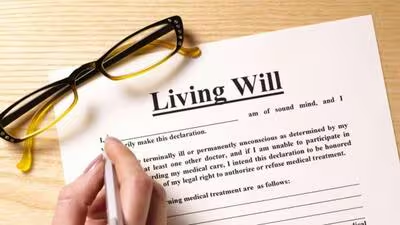
MUMBAI: Every Saturday morning, one of the consultation rooms at the PD Hinduja Hospital in Mahim attracts a very different set of visitors. They are not patients but come to discuss how they would want their lives to end – or, more precisely, how they would not want them prolonged.
Many who decide to make a living will don’t want to burden their families with difficult decisions. “I have seen a relative shoulder a massive emotional, physical and financial burden as she struggled to handle her mother’s last days. and it was evident her mother’s chances of survival were slim, it was very difficult for her to take a call Although she was a doctor.
I don’t want my family to go through that,” said Aditi Date, who didn’t go through with the process for want of guidance.
Set up in June last year, the hospital’s ‘Living Will Clinic’ has helped more than 100 people make critical end-of-life decisions and make a living will. Even so, only 50% of the population has signed up for it. Unlike a regular will, a living will is a legal document that specifies which life-sustaining medical treatments an individual would want to refuse if they become terminally ill or enter a permanent vegetative state. “These are decisions people take when they are healthy and in a position to take them. It is not activated on the first day of hospitalisation; rather, it can be activated only in case of terminal illness and only when it becomes clear that no further treatment will be beneficial for the patient,” explains Dr Smriti Khanna, who heads the hospital’s Living Wills Clinic. Making a living will ensure that doctors and caregivers honour an individual’s choices about end-of-life treatment. “We have a long way to go. In countries like the US, living wills are incorporated within the public health system, where doctors initiate discussions on the subject with their patients and take it forward. So, we have a long way to go here.” observes neurologist and epileptologist, Dr Roop Gursahani, from the End of LIfe Care in India Taskforce (ELCIT), the moving force behind Hinduja Hospital’s clinic. When doctors find further treatment not beneficial for a patient, and the individual is unable to make decisions for themselves, family members can share a copy of the living will with the hospital. The living will needs approvals at two levels. At the primary level, the treating doctor along with the head of the treating department and the institutional medical head, must approve the will. After that, the will is sent to a secondary committee, which includes the medical superintendent of the government-run JJ Hospital (for Mumbai and suburbs), two subject experts and an empanelled expert. It is only after their nod is received that the hospital can implement the directions given in the living will.
“There is a nationwide repository for living wills on the anvil but it is not yet functional,” says Dr Khanna.
