
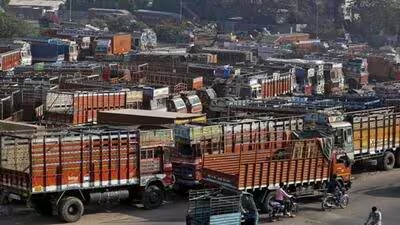
The Centre plans to complete the registration of all beneficiaries under its PARIVARTAN (Programme for Accelerated Renewal and Incentivization of Vehicle Assets for Reducing Transport Air Pollution and Network Emissions for Delhi-NCR) scheme for replacing older commercial vehicles within a year, half the two-year timeline approved by the Union cabinet in June, as it seeks to cut vehicular emissions ahead of next winter.
Ministry of Road Transport and Highways (MoRTH) secretary V Umashankar said the ministry is targeting 230,000 truck and bus registrations under the scheme in a year and has set an interim target of 25,000 registrations by the end of October.
The scheme’s single PARIVARTAN portal is designed as a one-stop platform connecting government agencies, vehicle manufacturers, dealers, banks, oil marketing companies and gas companies. It integrates databases including VAHAN, Digi End-of-Life Vehicle (ELV) and V-Scrap, allowing beneficiaries to complete eligibility checks, vehicle scrapping, financing and incentive claims through one digital workflow. The Centre has urged Uttar Pradesh and Rajasthan to step up awareness and outreach as registrations remain concentrated in Delhi and Haryana.
Individual owners account for 651 of the vehicles registered so far, making them the largest beneficiary group, officials said.
The government is now seeking to convert the early uptake into a faster nationwide fleet-renewal programme before the next winter pollution season.
Officials said beneficiaries could effectively receive a 25-30% discount on newer vehicles, with the cost shared by the Centre and states. PARIVARTAN seeks to replace older commercial vehicles, including BS-IV and older trucks and buses, with BS-VI or electric vehicles.
“If this initiative runs well, the visible results will be there for everyone to see next winter,” Umashankar said, citing the perceptible improvement following the conversion to Compressed Natural Gas (CNG) between 1998 and 2002.
