
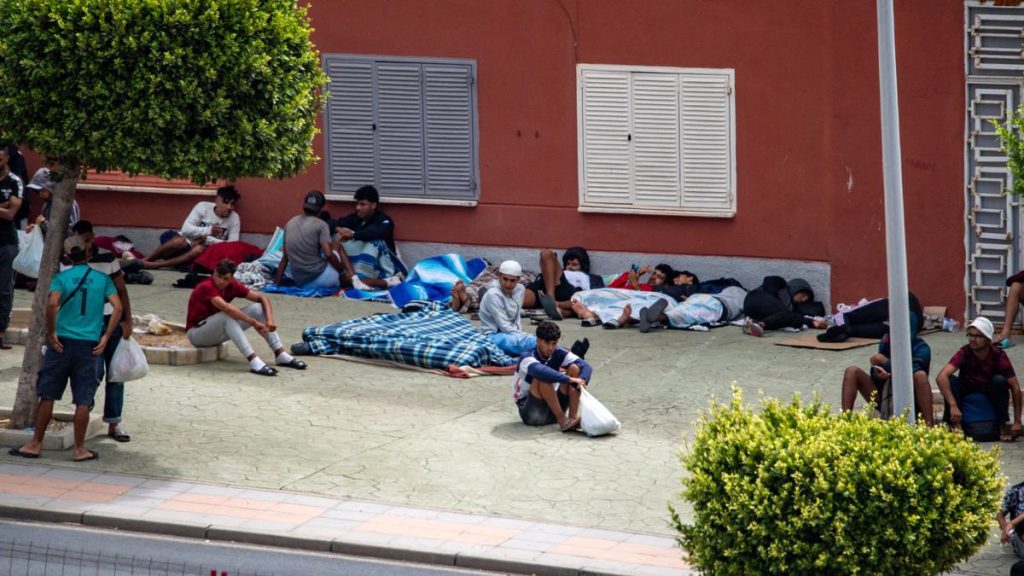
Protests over security in Spain’s North African enclave of Ceuta escalated into violent clashes with the Spanish military on Thursday (August 27, 2026), a month after a mass influx of migrants from Morocco.
The soldiers fled and called for police assistance. But she also appealed for calm, saying people had the right to protest but warning that growing hostility would not resolve the crisis. Prime Minister Pedro Sanchez has faced mounting criticism from Ceuta’s authorities and residents, who say Madrid reacted too slowly to the mass arrival.
The latest demonstration drew thousands of people late Wednesday (August 26, 2026) and ended in clashes after police fired tear gas to prevent confrontations with migrants camping on a beach, according to Spanish media reports. Police detained 12 migrants, all Moroccan, the spokesman said. Spain’s left-wing government puts the figure at between 3,500 and 7,000, while Ceuta’s right-wing leaders say it is at least 10,000. The Interior Ministry said Thursday (August 27, 2026) it would send additional personnel to help identify migrants, while the government approved €25 million in additional funding to help care for unaccompanied minors, who are entitled to special legal protections.
“The tension in the city of Ceuta is very high” because there is “no response” from the government and “we feel abandoned,” Kissy Chandiramani, the autonomous city’s finance councillor, told news radio SER on Thursday (August 27, 2026). Justice Minister Felix Bolanos appealed for calm, telling lawmakers in Madrid that authorities were working “without rest” to restore normality to the territory. To speed up the response, Spain’s Cabinet on Tuesday (August 25, 2026) approved the creation of a “single command” for Ceuta, to be led by Territorial Policy Minister Angel Victor Torres.
