
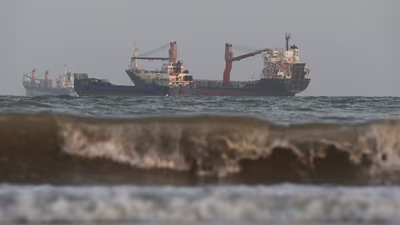
Iran and Oman are negotiating the opening of a temporary shipping corridor and the clearance of mines in the blockaded Strait of Hormuz, which both nations border.
Iranian Deputy Foreign Minister Kazem Gharibabadi, in an interview with local media, explained that the proposed arrangement would see ships entering the Gulf pass through Iranian waters, while those leaving would use Omani waters, then Iranian waters. He also said that if the plan with Oman was agreed upon, the two would have 30 to 60 days to hammer out a permanent route, adding that Iran’s Revolutionary Guards were involved in the talks and that the maps under discussion were drawn up by the armed forces.
A US-Iran memorandum of understanding signed in mid-June provided for the reopening of the Strait of Hormuz, and left it up to Iran and Oman “to define the future administration and maritime services” in the waterway, in discussion with Gulf states and in line with international law. In Tehran on Tuesday, the Iranian and Omani foreign ministers discussed a framework agreement that would establish a “temporary corridor” for shipping and a project to clear mines in the strait, according to a joint statement. Omani Foreign Minister Badr Albusaidi said on X after the talks that he hoped the new corridor and “practical arrangements to restore safe navigation” would be announced “soon”. Oman, for its part, is seeking to “separate freedom of navigation as much as possible from the wider conflict”, with the two nations’ different strategies “the real source of the delay”, said Baaboud.
The Guards said on Wednesday that they had agreed in negotiations with Oman to share revenues earned from any fees imposed in the strait — an idea rejected by Washington.
Washington has not responded to the Iran-Oman joint statement, but beforehand, it reported progress on the Hormuz issue.
