
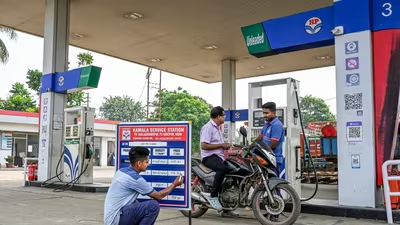
The government is exploring whether premium petrol brands such as Indian Oil’s XP95, Bharat Petroleum’s SPEED and Hindustan Petroleum’s Power95 can be sold with a 10% ethanol blend, as it looks for a way to offer an E10 option to owners of older vehicles without creating separate fuel infrastructure, according to an exclusive report by LiveMint.
The proposal comes amid persistent concerns among motorists about the impact of E20 petrol on older vehicles and fuel economy. E20 contains 20% ethanol and is now the standard petrol blend at fuel stations across India.
The petroleum ministry is discussing the proposal with state-run oil marketing companies (OMCs) Indian Oil Corporation, Bharat Petroleum Corporation and Hindustan Petroleum Corporation, three people aware of the discussions told Mint. The discussions are at an early stage and no final decision has been taken, the report said.
Government has opposed multiple fuel streams
It also distinguished premium petrol from E10, arguing that premium fuels are niche products sold in limited quantities and are not separate nationwide base-fuel streams. In July, the government said vehicles designed for E10 could see a marginal 3-5% decline in fuel efficiency with E20, while denying evidence of widespread engine failures or vehicle breakdowns attributable to ethanol blending. The government’s ethanol-blending programme began with a pilot in 2001 and has since expanded progressively. Ethanol blending stood at around 1.53% in 2013-14 before rising to the current E20 level.
Because the government has previously rejected calls for petrol stations to simultaneously stock multiple ethanol blends, the proposal is significant.
A second person said the government and OMCs were assessing whether consumers would prefer a premium E10 fuel or a cheaper, regular E10 option. In July, the petroleum ministry said maintaining separate nationwide supply chains for pure petrol, E10 and E20 would create major logistical challenges, increase handling costs and complicate inventory management.
