
“There’s a lambence, a soft, luminous quality to the light, as though it came not from just today but from back in the old classic times. It might have fauns and satyrs and the gods and—from Greece, from Olympus—in it somewhere. It lasts just for a day or two, then it’s gone.”
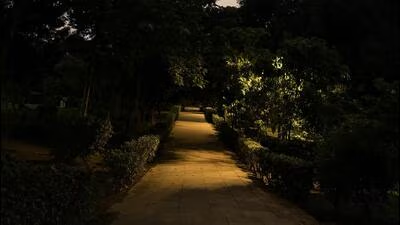
Take this humid evening. The centuries-old Sheesh Gumbad stands beyond the trees, its dome rising above the branches. A tiled track leads towards it between rows of shrubs. A man and woman have stopped midway to talk. Above the dome, the moon has appeared. The sky is still blue. Minutes later, the sky darkens and the moon grows brighter, but an orange band remains along the horizon. Meanwhile, Sheesh Gumbad’s dome has become a dark shape. On the sloping lawn, across a narrow pathway from the monument, park people are sitting in twos and threes. For a few minutes, three kinds of light are visible at once. Daylight remains along the horizon. The moon is overhead. Electric lamps cast light on the ground. The sloping lawn receives the light of these lamps in separate patches. A few people are sitting inside the patches. Others, seated outside them, are barely discernible.
Because of clouds but because of Delhi’s haze, no stars are visible, not.
