
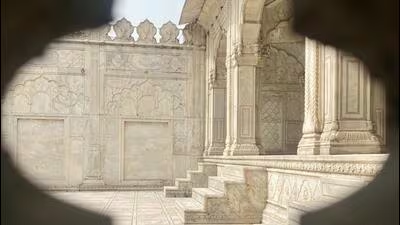
Minars rise above the walls. Domes rise above the roof. Arches frame the prayer hall. Moti Masjid, the pearl mosque. Built entirely of white marble.
Art historian John Ruskin wrote an epic three-volume treatise on the stones of Venice. This modest series picks a smaller subject, the white marble of Delhi’s Red Fort, most of whose buildings are made of red sandstone. Lal Qila is otherwise too large and complicated to chronicle in a single lifetime. One courtyard leads to another. One pavilion opens into another. Every visit leaves something unseen. Marble provides a way of looking at one aspect of the fort at a time. This time, the destination is Moti Masjid. The mosque stands towards the deeper end of the complex. It was not part of Shah Jahan’s original plan for the fort. The emperor, whose living quarters were inside the fort, would travel in a cavalcade of elephants and horses to the grand Jama Masjid outside the fort for the special Friday prayers. Aurangzeb, Shah Jahan’s son, once he became emperor, built Moti Masjid within the fort, close to the royal bath.
