
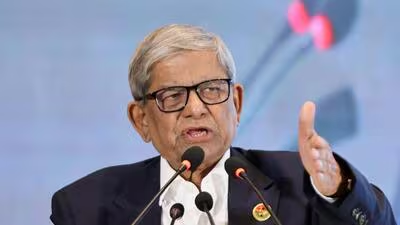
Bangladesh’s Parliament elected a stalwart of the country’s new ruling party to the presidency Thursday after the post fell vacant last month following the resignation of the former president, who was a close ally of ousted Prime Minister Sheikh Hasina.
A total of 349 members of Parliament were eligible to vote in what was the first contested presidential election since Oct. 1991, when the nation became a parliamentary democracy. Alamgir was a long-time secretary-general of BNP and steered the political movement against the 15-year rule of Hasina. She fled the country in August 2024 during a mass uprising over allegations of autocratic rule and corruption in the allocation of government jobs, and her party has been barred from politics since last year.
Every presidential election since then had been uncontested, drawing no challengers to the ruling party’s candidate.
A new government headed by Prime Minister Tarique Rahman, the son of a former prime minister who was the archrival of Hasina, came to power with a landslide victory in February after 18 months of interim rule under Nobel Peace Prize laureate Muhammad Yunus. His resignation meant that Hasina, who is in exile in India, lost a trusted ally in the establishment at home. Bangladesh’s president is the head of state and commander-in-chief of the influential armed forces, while the prime minister is the head of the government. Though the presidency is largely ceremonial, it has important roles to play during political crises. Last month, Bangladesh’s former President Mohammed Shahabuddin, who took office during Hasina’s rule, resigned halfway through his term, following years of political turbulence. Hasina’s party was not allowed to take part in the election. Shahabuddin was known to be a trusted follower of Hasina. Following her ouster, he faced strong opposition from a student group that led the uprising against Hasina. The protesters branded him a collaborator of Hasina and took to the streets demanding his resignation and arrest.
Alamgir was expected to take office on Friday.
