
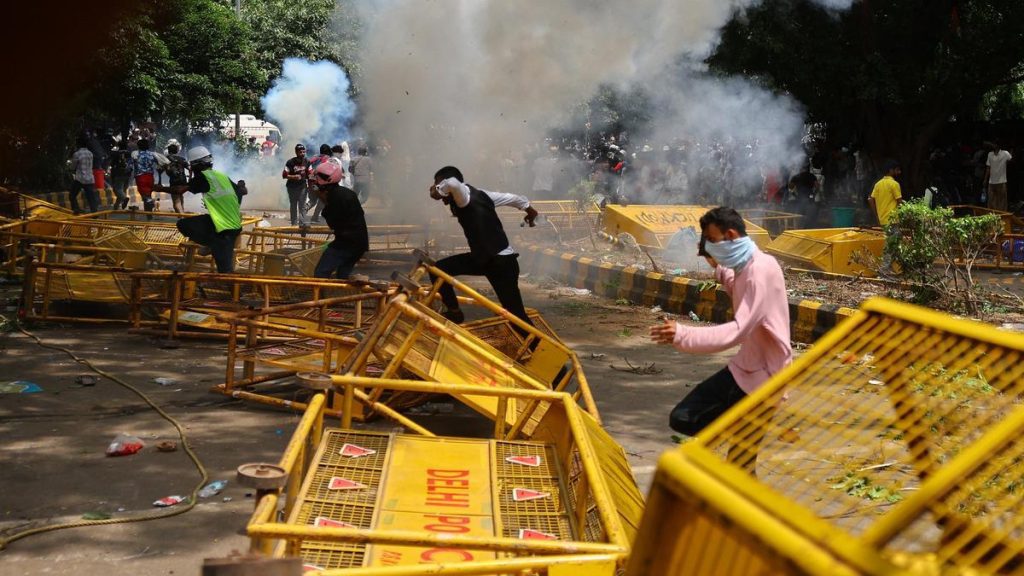
The Supreme Court on Thursday (August 20, 2026) ordered the formation of a high-powered enquiry committee (HPEC) to examine issues, including police violence, NEET-UG protests across the country.
The committee will be headed by Justice (Retd.) R. Subhash Reddy, former judge of the Supreme Court of India. Other members include, Justice Ravi Shankar Jha, former Chief Justice of Punjab and Haryana High Court, Justice Shalinder Kaur, former Judge of the Delhi High Court, Rishi Kumar Shukla, former Director of the Central Bureau of Investigation and Dr. L.R. Bishnoi, retired Director General of Police, Meghalaya. The court order listed the issues raised by the petitioners which the HPEC need to enquire into. These include the use of excessive force and violence against protestors by police authorities and other agencies, including the deployment of pellet guns, electric batons, lathi charges, and tear gas without adequate warning or proportionality, resulting in severe bodily harm and injuries, some of which are alleged to be of a grievous and lasting nature. The question of ensuring a proportionate and measured police response during protests, public gatherings, and peaceful assemblies, so as to strike an appropriate balance between the maintenance of public order and the constitutional right to peaceful dissent; The desirability of banning the use of metallic kinetic projectiles or pellets fired from pump-action rifles or projectile-action guns, having regard to the grave and, at times, irreversible bodily harm occasioned by their deployment against protestors; The necessity of ensuring that police and security personnel wear proper uniforms and visible nameplates at the time of effecting arrests or using force during crowd-control operations, so as to secure accountability and enable the identification of individual officers. The petitioners had raised the need for an enquiry into the allegations pertaining to the monitoring and surveillance of protestors by police personnel, and the extent to which such measures, if undertaken, were consistent with the protestors’ constitutional rights to privacy and free assembly. The alleged incidents of targeted violence, harassment, molestation and/or any secondary victimisation directed against female protestors, which, given the gravity and sensitivity of the allegations, warrant a focused and expeditious enquiry; The provision of medical and other requisite support, including award of compensation, to victims of alleged police abuse, including the manner and adequacy of such support extended thus far. Similarly, the court has listed issues raised by respondents, including the families of injured police officers.
The court further clarified that the constitution of the HPEC “shall in no way deter or debar the police authorities or other security forces from taking administrative or disciplinary action against such of their officers as may be found to be in contravention of the rules governing their conduct”.
