
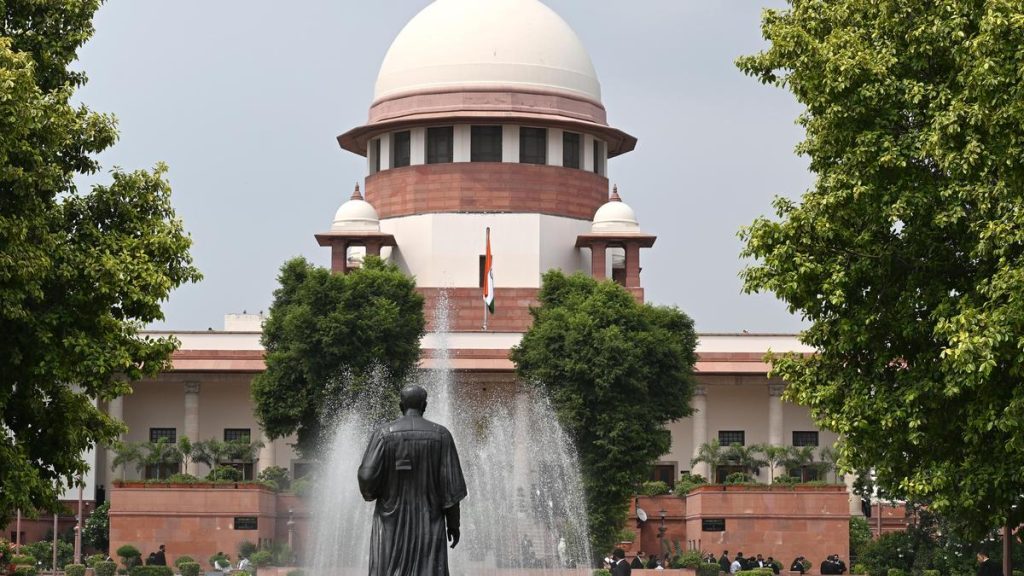
The Supreme Court on Tuesday (August 18, 2026) agreed to use an exceptional power under Article 142 of the Constitution to quash First Information Reports (FIRs) registered against students who joined nationwide protests over the NEET-UG exam paper leaks that led to the resignation of Dharmendra Pradhan as Education Minister and compelled the government to introspect.
The court sought a list of FIRs in which only students were named. Advocate Vrinda Grover, representing students’ right to protest, pointed out that the Delhi Police have not disclosed details regarding any FIRs. “We will quash these FIRs by invoking Article 142. Protests in Delhi, which triggered agitations across the country, led to a police crackdown on July 20 in which pellet guns and tear gas were allegedly used.
FIRs involving elements with serious criminal antecedents would be decided subject to discussion in court,” Chief Justice Surya Kant, heading a three-judge Bench, said. She said the national capital’s police have not shared even the FIR numbers despite promising to take no action against students and youngsters who protested peacefully. Solicitor General Tushar Mehta, the government’s top law officer and Delhi Police counsel, said the police would confine their investigation to 2,873 persons with “serious criminal background” who were identified at the protest site. He said these persons included history-sheeters facing serious charges, including murder, rape, child sexual abuse, etc.
Advocate Rizwan Ahmed, appearing for retired Air Force officer Manish Kumar Solanki, who has squarely blamed the organisers of the NEET-UG protests, including the Cockroach Janta Party (CJP), for the July 20 violence, objected to the court’s proposed move to quash the FIRs against students.
He asked if this would be a “one-off” or was the court setting a precedent. He said the students had not expressed a “shred of remorse or regret”.
