
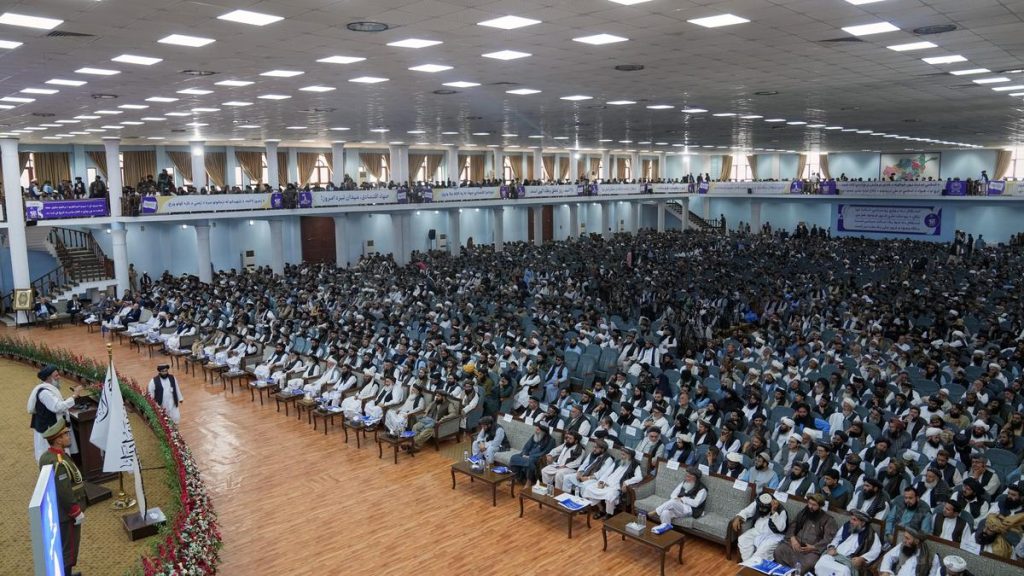
Taliban rulers and other officials gathered at Afghanistan’s traditional Loya Jirga assembly hall on Saturday (August 15, 2026) to celebrate the fifth anniversary of their return to power, touting having brought stability after decades of upheaval.
A top United Nations official, however, warned of a grave human rights crisis in the country where girls above the age of 12 are denied an education. “My mandate has concluded that this system amounts to the crime against humanity of gender persecution. “Across Afghanistan we continue to document arbitrary arrests, torture and ill treatment, extrajudicial killings, corporal punishment, enforced disappearances, restrictions on freedom of expression, attacks on journalists and human rights defenders, persecution of ethnic and religious minorities, discrimination against LGBT plus persons, and the reduction of civic space. Mr.
In a video message, Richard Bennett, the UN special rapporteur on the human rights situation in Afghanistan, said the country was undergoing a deep human rights crisis. “While the era of war has ended, it’s questionable whether there’s real peace, and the human rights situation has steadily deteriorated, most dramatically for women and girls,” Mr. Bennett said. “The crisis extends well beyond gender discrimination, even beyond gender apartheid,” he continued. Bennett warned the international community against “normalising” the Taliban’s policies, saying it would legitimise the discrimination and tell “victims their suffering is negotiable. In an interview with The Associated Press this week, Molvi Hayatullah Mahajar Farahi, deputy minister in the Taliban government for broadcasting at the Ministry of Information and Culture, said despite “challenges and difficulties”, the administration has in the past five years delivered security, infrastructure and created jobs.
