
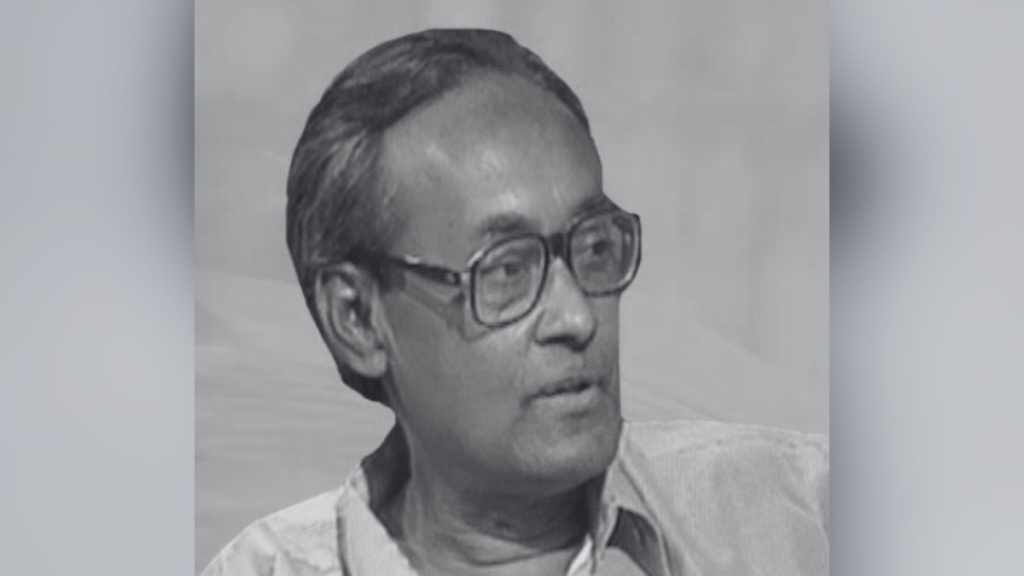
In the History Department’s first-floor lecture room in North Campus, sometime in 1998, Sumit Sarkar walked in to introduce a course titled ‘Social History of Modern India’. I still have vivid memories of that class, which was an overview of what to expect over the coming weeks.
Having come to the M.A. programme as a Physics graduate, I had never heard of Bernard S. Cohn, E.P. Thompson or C.A. Bayly. The second was the defining reading of the course: Prof. Sarkar’s own then newly published book, Writing Social History . Within the first week of his classes, I bought a copy. By the end of the year, everything that I saw around me, and experiences that one routinely encountered, seemed to acquire new meanings. Why is the sweeper the sweeper? Why do we think the way we think? How do we come to learn the languages we learn, and in the manner that we do? It was an exhilarating journey of learning. Term papers were not mandatory for the M.A. at Delhi University in those days. But Sumit encouraged writing. He would painstakingly write notes in the margins, ask further questions, suggest alternative framings here and there, and then return those handwritten pages. I had preserved them like treasures for several years, but somewhere along the way I misplaced them. A few months after completing my M.A., I visited him and Tanika at their home on the St Stephen’s College campus. Tanika, too, had taught an optional course that I had taken, on women in the Indian national movement. It was evening, and Sumit offered me a drink. I was thrilled at the prospect of sharing one with the Professor.
