
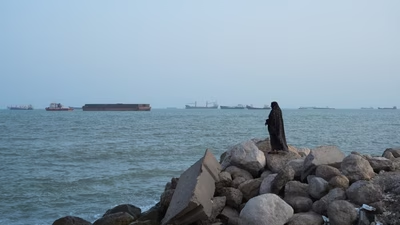
Global oil demand is set for a deeper contraction this year as renewed hostilities in the Middle East and disruptions at key shipping chokepoints derail the recovery in supplies, pushing up fuel prices and weighing on consumption, the International Energy Agency said.
Why It Matters
Global oil supply rose by 2.4 million barrels a day in July to 101.5 million barrels a day, but remained 6.3 million barrels a day below year-earlier levels, with 8.3 million barrels a day of Gulf production still shut in. Regional exports—including routes bypassing Hormuz—fell by 2.1 million barrels a day to 15 million barrels a day. Oil loadings swung sharply during the month, reaching 20 million barrels a day in early July before falling to roughly 12 million barrels a day later in the month. For the full year, the IEA now expects global supply to decline by 4.3 million barrels a day, deeper than its previous forecast for a 3.7 million-barrel-a-day drop.
It expects the market to return to surplus toward the end of the year, but warned that risks remain substantial and the need to reopen the Strait is becoming more urgent as previously available inventory buffers are rapidly depleted.
Key Questions
The overall outlook improves sharply in 2027, when global oil demand is expected to return to growth, rising by 2.4 million barrels a day. The recovery is expected to be driven by the normalization of supply chains, lower oil prices and stronger global economic growth, which the IEA estimates will accelerate by half a percentage point to 3.4%. Global supply is expected to surge by around 8.3 million barrels a day, led by a 5.8 million-barrel-a-day increase from OPEC and its allies and a 2.5 million-barrel-a-day gain from producers outside the group, according to the agency.
