
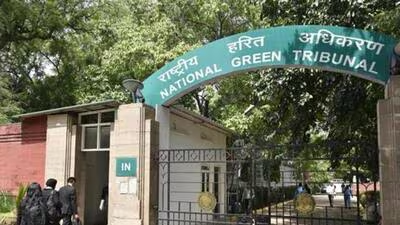
Pune: The National Green Tribunal (NGT), Western Zone Bench, on Monday directed the Pune district collector and the Central Ground Water Authority (CGWA) to establish integrated digital systems within six months to strengthen groundwater regulation and monitoring across the district. The tribunal also asked the authorities to submit a compliance report after the deadline.
Event Context
The tribunal issued the order while disposing of an application filed by Pushkar Kulkarni, a resident of Pashan-Sus Road, in March 2025, seeking stricter regulation of groundwater extraction following the Guillain-Barré Syndrome (GBS) outbreak that began in January that year. The application raised suspicions about groundwater contamination’s role in the GBS outbreak.
GBS is a rare neurological disorder where the body’s immune system attacks the peripheral nerves. On February 18, 2025, Pune alone reported a total of 183 confirmed GBS cases, resulting in nine deaths.
The tribunal noted that while the GBS outbreak was brought under control, it underscored the importance of ensuring safe drinking water and preventing groundwater contamination. It observed that the issue extends beyond disease control and requires a long-term mechanism for regulating groundwater extraction and monitoring water quality.
The tribunal described the Standard Operating Procedure (SOP) that the Pune district collector submitted to the NGT in June as a comprehensive framework for groundwater regulation and directed its time-bound implementation.
The SOP proposes a phased implementation over 24 months. In the first phase, authorities will conduct a GIS-based survey and mapping of all borewells and wells, assign QR codes to groundwater structures and create a district-wide digital database.
The second phase includes installation of electronic flow meters, telemetry systems and GPS tracking of private water tankers and drilling rigs, along with action against illegal groundwater extraction points.
The third phase focuses on sealing unauthorised borewells, initiating penal action against violators, recovering environmental compensation and promoting groundwater recharge through rainwater harvesting measures.
The final phase involves assessing groundwater levels and submitting compliance reports to the competent authorities.
The tribunal observed that successful implementation of the SOP would require close coordination among multiple government agencies. It, therefore, directed the district collector to develop a unified web portal to manage groundwater-related data and monitor the SOP’s implementation.
Player Focus
During subsequent hearings, multiple agencies submitted their responses, including the Pune Municipal Corporation (PMC), Pimpri Chinchwad Municipal Corporation (PCMC), Pune Metropolitan Region Development Authority (PMRDA), Maharashtra Pollution Control Board (MPCB), Pune Zilla Parishad, Pune district collector, the State of Maharashtra through the principal secretary, the Central Ground Water Board, and the Groundwater Surveys & Development Agency.
Team Analysis
The tribunal granted six months to create these digital monitoring systems and directed both authorities to submit a compliance report thereafter. The tribunal disposed of the case with these directions but kept the matter open for further consideration after reviewing the compliance report.
Match Outlook
Simultaneously, the CGWA has been asked to complete its Management Information System (MIS), with both platforms expected to function in coordination for seamless sharing of groundwater information.
source
Kulkarni’s application sought a district-wide survey of borewells, dug wells and other groundwater sources, identification of contamination sources, and strict implementation of the Centre’s groundwater extraction guidelines.
