
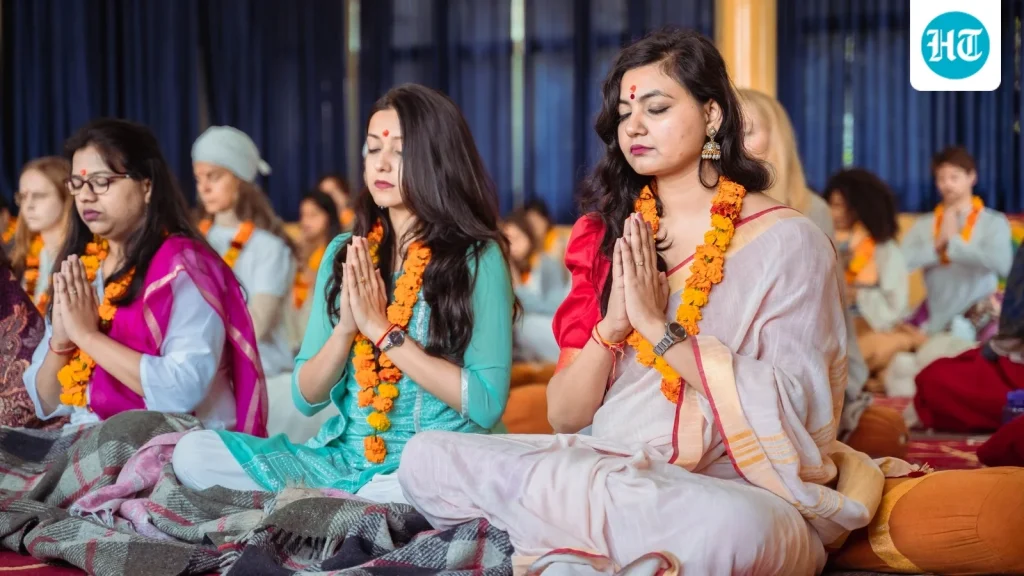
When you hear the word Bhakti, you may think of temples, prayers or religious ceremonies. But according to the Aathman Awareness Centre, devotion goes much deeper than outward practices. According to the spiritual centre, Bhakti is not tied to any one religion. Instead, it is a personal journey of love, surrender and connection with the Divine.
Step by Step Guide
According to Aathman Awareness Centre, Bhakti starts long before any ritual or pilgrimage.
“Before it ever becomes a prayer or pilgrimage, Bhakti is something far more intimate: the heart’s quiet ache to return to what it has always loved.”
The organisation explains that this longing can be directed toward God, the Divine or your deepest Self. The name may differ, but the feeling remains the same.
Also Read Beginner’s guide to Bhakti: A spiritual guru explains how to start the path of devotion
The Centre concludes that Bhakti belongs to no religion, culture or era. It describes devotion as “the oldest language of the human soul” and says the journey begins when you stop trying to perform spirituality and simply allow your heart to open.
Why Bhakti goes beyond religion
It also says Bhakti does not depend on knowledge or social status. Instead, it asks one simple question: Can you love without holding back?
“When that love turns toward the Infinite, it becomes devotion. And when devotion deepens, surrender follows naturally.”
The Centre believes that while religions and sacred traditions have their own value, they are expressions of devotion rather than devotion itself.
“Temples and ceremonies hold sacred energy. But they are expressions of Bhakti, not Bhakti itself.”
The message encourages you to look beyond labels such as religion, nationality or profession. According to the Centre, these identities help people live in society but should not become barriers to experiencing the Divine.
It compares divine grace to sunlight and air, saying both are available to everyone without discrimination.
One of the concepts shared by Aathman Awareness Centre is that no two spiritual journeys are alike.
“Your bond with the Divine is not standardised.”
For one person, devotion may appear as silent meditation. For another, it may be singing, helping others or offering a quiet prayer during everyday chores. The Centre says what matters is the sincerity behind your actions, not how they appear to others.
Also Read A spiritual seeker shares how spirituality can help you let go of the past
Devotion gives meaning to practices such as yoga, meditation and self-inquiry.
“Without it, discipline grows rigid, knowledge proud. Bhakti softens everything.”
According to the organisation, devotion reminds you that spiritual growth is not about collecting achievements. Instead, it is about letting go of the feeling of separation from the Divine.
