
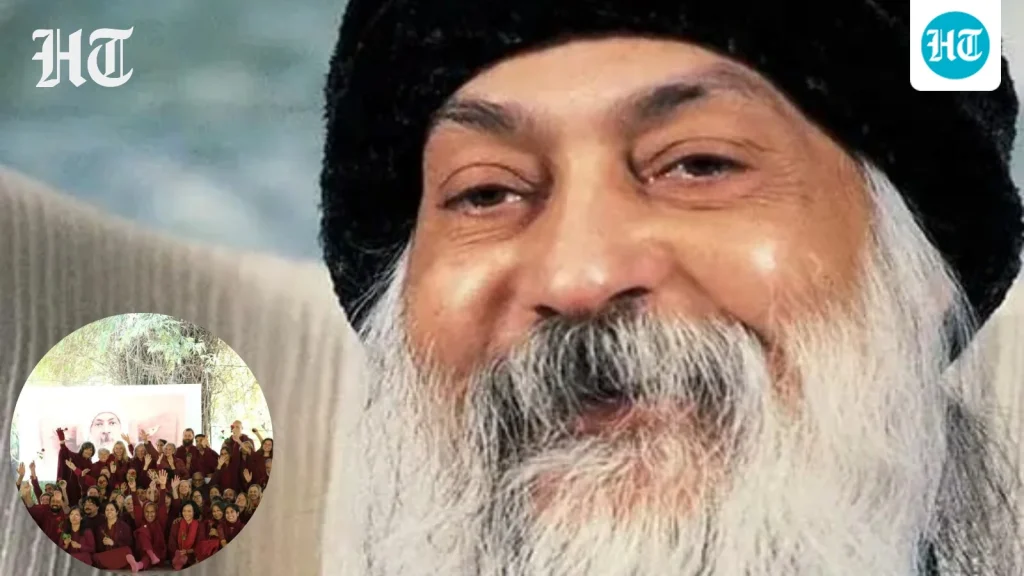
Guru Purnima is widely observed as a day to honor teachers and the wisdom they share. While many traditions celebrate it through rituals, Osho viewed the occasion from a different perspective. For him, Guru Purnima was not simply about paying respect to a teacher but about beginning an inward journey. His teachings encouraged people to move beyond intellectual understanding, let go of the ego, and become open to self-discovery. This approach continues to inspire many seekers who see the day as an opportunity for personal transformation rather than ceremonial observance.
The Guru is a doorway, not the final destination
One of Osho’s central teachings is that a Guru should never become the destination. Instead, the Guru serves as a doorway that helps a seeker move toward a deeper understanding of the divine. In this view, the teacher is respected not because of personal importance, but because they help guide others toward a greater truth beyond themselves.
Speaking about the significance of Guru Purnima, Swami Chaitanya Keerti said, “The occasion represents far more than a ceremonial observance; it is a celebration of the transformative relationship between the Master and the disciple. Osho described Guru Purnima as an opportunity for seekers to let go of accumulated conditioning and rediscover their essential nature. According to Osho, the disciple’s journey unfolds through three simple movements: listening with a quiet and unarguing mind, allowing that listening to settle deeply in the heart, and finally letting it become a lived experience. The celebration reflected these teachings through meditation, music, discourse and collective silence.”
Reflecting these ideas, Osho Dham marked Guru Purnima with a day-long program centred on meditation, music, silence, and creative expression. The gathering brought together seekers, meditators, and disciples to honor the enduring legacy of awakened masters while encouraging personal reflection and awareness.
The day began with a live keertan, creating a peaceful atmosphere before participants came together for a community lunch. A major highlight was the inauguration of an art exhibition by Ma Anand Bhakti, unveiled by Ma Dharm Jyoti and Swami Chaitanya Keerti, both longtime disciples of Osho. The exhibition featured 18 original artworks, including intricate mandalas and abstract paintings created through meditation and surrender rather than deliberate planning. The program concluded with an Osho discourse followed by a collective Kundalini Meditation, offering participants an opportunity to end the day in silence and mindful awareness.
ALSO READ: Guru Purnima 2026: An expert explains the hidden spiritual science behind this sacred occasion
Disclaimer: This article is based on Osho’s spiritual philosophy and statements. Spiritual teachings are matters of personal belief and should be understood as philosophical perspectives rather than facts.
A Guru as a channel, not the source
According to Ma Dhyan Prachi, a meditation facilitator at Osho Dham, Guru Purnima is less about remembering a date on the calendar and more about renewing the three disciplines Osho emphasized: listening without argument, allowing the teachings to settle in the heart, and putting those insights into practice. She explains that real transformation does not come from simply agreeing with an idea. Instead, it comes through the willingness to let go of old patterns and experience inner change.
ALSO READ: 10 things in life that can coexist even if they seem contradictory
Osho often described the relationship between a Guru and a disciple as unlike any other human relationship. According to his teachings, a disciple must first allow the ego, personal defences, and fixed beliefs to dissolve before genuine transformation can take place. He used the idea of “dying” as a metaphor for releasing the old self so that a more authentic way of being can emerge.
Rather than presenting himself as the creator of a new philosophy, Osho described the Guru as a simple instrument through which timeless wisdom flows. He compared the Guru to a hollow bamboo that allows an eternal message to pass through without claiming ownership of it. This reflects his belief that truth belongs to no individual but is shared across awakened beings and spiritual traditions.
Drawing inspiration from Zen, Osho taught that a Guru does not hand over something that is missing. Instead, the Guru helps reveal what has always existed within you. He believed that truth is already present, but it often goes unnoticed due to the distractions created by the mind and ego.
He also suggested that the presence of an awakened teacher can itself become a form of learning. Using simple imagery, Osho compared this to the way fragrance naturally settles into a piece of cloth. In the same way, sitting quietly in the presence of someone deeply aware can gradually influence a seeker’s own understanding without the need for constant words.
ALSO READ: Saturn Retrograde 2026: 5 signs this powerful transit may be affecting you
Osho described the journey of a disciple as unfolding through three simple yet meaningful stages:
