
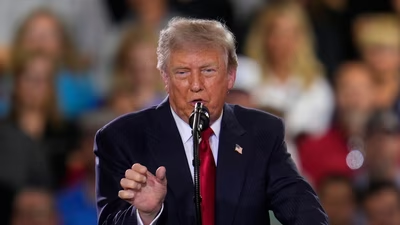
US President Donald Trump has indicated that he wants to avoid another round of military escalation with Iran, saying he would prefer a diplomatic resolution while repeating his warning of possible military action if negotiations fail.
Latest Update
Trump said the US was negotiating from a position of strength but stressed that he hoped force would not be necessary, in an interview with Fox News on Tuesday.
“I think we have a very strong position right now,” Trump said. While reiterating his threat to bomb Iran’s major bridges if no agreement is reached, he added, “if I can avoid doing that, I’d like to do that.”
Trump’s remarks come four days after the US and Iran paused their exchange of attacks, bringing an end to nearly two weeks of strikes that followed the collapse of peace talks over the Strait of Hormuz.
Also read | Trump bets this weapon could hurt Iran more than the bombs being dropped
Addressing the situation, Trump told Fox News, “Iran doesn’t control the strait, we control the strait. They can drop a couple of mines in there and screw things up, but we control the strait.”
The broader regional maritime situation remains strained. In the southern Red Sea and the Bab el-Mandeb Strait, Iran-backed Houthi rebels last week warned vessels against calling at Saudi Arabian ports.
Following that warning, observable shipping activity at Saudi Arabia’s Red Sea export hub of Yanbu has declined, with empty supertankers instead heading to Egypt’s Mediterranean port of Sidi Kerir to load Saudi crude.
On Monday, the Houthis claimed responsibility for drone strikes targeting Saudi oil facilities, although they did not specify when the attacks occurred. Saudi Arabia has not announced any attack from Yemen since Saturday morning but said on Monday that it had intercepted several drones launched from Iraq towards petroleum facilities.
(With inputs from agencies)
Details
Since then, diplomatic attention has shifted to efforts aimed at restoring shipping through the strategically important waterway. According to people familiar with the discussions, Omani and Iranian negotiators met in Tehran over the weekend and talks remain underway.
The people said an agreement to increase shipping traffic through the Strait of Hormuz could pave the way for formal US-Iran negotiations on Tehran’s nuclear programme and help bring the five-month conflict to a permanent end. Omani officials are hoping to announce progress within the next few days, although no agreement has been finalised.
The pause in military action has also affected global energy markets. Brent crude has fallen to $86 a barrel after climbing above $100 during the latest escalation in fighting.
Also read | What did Trump say about friendship with Lindsey Graham? ‘We started a little bit rough, but then…’
Lower oil prices are expected to reduce pressure on fuel costs in the United States, offering political relief for Trump at a time when public opposition to the war has weighed on the Republican Party ahead of the November midterm elections.
Trump is scheduled to meet Israeli Prime Minister Benjamin Netanyahu in Washington later on Tuesday.
Netanyahu has said he intends to urge the US President to maintain a “constant watch” on Iran’s nuclear programme, an issue that remains unresolved following the collapse of the interim peace arrangement reached in mid-June.
Although direct military exchanges have paused, tensions around the Strait of Hormuz remain high. Shipping traffic through the waterway has declined sharply, with few vessels transiting the area using active tracking systems as Iran continues to warn ships against passing without its permission.
Also read | ‘How to kill Melania Trump’: Iran’s chilling video targets US First Lady, Barron with assassination plot, ‘Wait for us’
The US has also reinstated its naval blockade to prevent ships from docking at Iranian ports.
Ship-tracking data shows at least eight crude carriers are expected to arrive at Sidi Kerir over the coming weeks through mid-August.
