
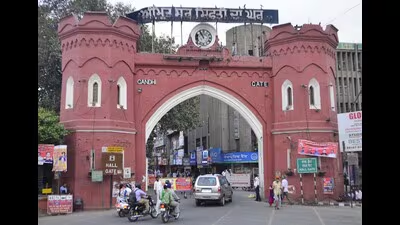
Being an Ambarsariya, almost every week finds me walking from Hall Gate, one of the historic 12 gates of the Walled City, to the Golden Temple.
Event Context
Sometimes it is early morning, when the lively avenue is still enveloped in silence. Other times, it is early evening, when chaos dances on the street. Thanks to the bus-stand tuk-tuks, I’m dropped right at this landmark, built in 1873 and named after Amritsar’s then British deputy commissioner CH Hall. Why bother driving a car through this traffic-clogged route?
What surprises me is that despite walking this path for years, it hasn’t ever bored me. The welcome begins under the shade of a grand blackboard tree—a blessing during the blistering summer. Beneath its canopy sits the traffic police’s favourite spot for pulling over commuters. Youngsters, pulled over most frequently, can be seen spinning elaborate tales to the officers. Nearby, elderly men dealing in torn currency notes watch the drama unfold from behind their dusty desks, enjoying free entertainment.
As I stroll ahead, the market is a flurry of commerce—selling everything from electronics and clothes to shoes and street food. We are, after all, deeply entrenched in materialism. The shops peddling exorbitant mobile phones are always the busiest. Meanwhile, Retreat, the street’s lone bookstore, rarely sees a customer, even as its large glass display brims with the latest titles.
Looking up, shop walls carrying portraits of long-departed owners stir quiet reflections on mortality. So do the brief morning prayers offered as shutters roll up. Some shopkeepers seem perpetually gloomy, others endlessly cheerful. When sipping their morning tea, most remain glued to their smartphones—a silent nod to modern addiction.
My pace slows near the kulfi shops. I love watching the traditional dessert being plated with rich creams and flavoured syrups. The walk slows again past an aloo-tikki stall, its irresistible aroma pulling me in. Last weekend, it quite literally arrested my progress, sending my tastebuds on a delicious detour.
Team Analysis
Within minutes, past shops selling wedding cards and school textbooks, I reach the colonial-era Town Hall, home to bustling cafes and the Partition Museum. I rarely miss the chance to walk beneath its high-ceiling corridor, illuminated by chandeliers. Opposite stands Gurdwara Santokhsar Sahib. Sitting beside its sarovar is deeply meditative; the quietude inside is an oasis.
Stepping back outside brings me face-to-face with the energy of Heritage Street—a sea of tourists, souvenir vendors, street photographers, and persistent hotel touts pitching food, market tours, or trips to the Attari-Wagah border. Yet, there is a distinct joy in watching visitors, their eyes wide and tongues eager as they share excited tales of their Amritsar adventure.
Match Outlook
Just a few paces ahead stands a pre-Partition mosque I keep promising myself I will explore. Further along, the classical facade of the Ramada hotel momentarily transports me to Vienna. It also triggers fond memories of my days as a journalist interviewing film celebrities in its lounge for the very newspaper you hold in your hands.
The moment I step into Sri Darbar Sahib (Golden Temple), a profound lightness takes over. Whatever tiredness accumulated along the way instantly vanishes. Later, I take the same route home, never tiring of the familiar faces and scenes that keep my inner flâneur alive.
The writer is an Amritsar-based freelance contributor.
