
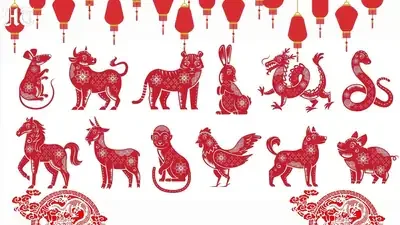
Most people are familiar with Western zodiac signs such as Aries, Taurus and Gemini. But another astrology system, known as Chinese astrology, has been followed for centuries and continues to attract millions of readers around the world.
Event Context
Today, Chinese horoscope forecasts are easy to find in books, newspapers and on social media. Some people read them for entertainment, while others use them as a way to reflect on relationships, career decisions and different stages of life.
Although Chinese astrology is not supported by scientific evidence, it remains an important cultural tradition in many parts of Asia and has gained a global following over the years.
Also Read Chinese Horoscope Today, July 18, 2026: Small victories can pave the way for monumental progress for all signs
Chinese astrology is a traditional system that began in ancient China more than 2,000 years ago. It follows the Chinese lunar calendar instead of the Gregorian calendar used in most countries today.
Each lunar year is linked to one of 12 zodiac animals: Rat, Ox, Tiger, Rabbit, Dragon, Snake, Horse, Goat, Monkey, Rooster, Dog and Pig. A person’s zodiac animal is usually determined by the year they were born, although those born close to the Lunar New Year may belong to a different sign because the date changes each year.
Chinese astrology also includes the Five Elements of Wood, Fire, Earth, Metal and Water, along with the concepts of Yin and Yang. Practitioners believe these are used together to understand personality traits, life cycles and compatibility.
The two systems work in different ways.
People follow Chinese astrology for different reasons. Some enjoy reading daily or yearly horoscope forecasts. Others look at zodiac compatibility or annual predictions before making personal or professional decisions.
Chinese astrology continues to be widely followed in China, Singapore, Malaysia, Hong Kong and Taiwan. Interest has also grown in countries such as the United States, Australia and the UK through books, websites and social media.
Team Analysis
While scientists do not consider Chinese astrology a reliable way to predict future events, its long history and cultural significance continue to make it one of the world’s best-known traditional astrology systems.
Disclaimer: Chinese astrology is a traditional cultural belief system and is not supported by scientific evidence. This article is intended to explain how the system works and does not present astrological interpretations as established facts.
Match Outlook
Also Read Western Astrology says a planetary transit is going to bring major transformation for 7 Years. An expert explains how
source
Western astrology assigns a zodiac sign based on a person’s birth date and the position of the Sun. Chinese astrology, on the other hand, is based mainly on the birth year according to the Chinese lunar calendar.
There is another important difference. Many people think Chinese astrology is only about the 12 zodiac animals. However, Malaysian Chinese metaphysics expert Joey Yap says the system is much broader.
On his official website, Joey Yap describes Chinese astrology as “a sophisticated system thousands of years old” that looks at “strengths, timing cycles, opportunities, and personal challenges through four key pillars.” According to him, a complete reading considers the year, month, day and hour of birth, rather than only a person’s zodiac animal.
According to Yap, the purpose of Chinese metaphysics is to help people understand timing rather than make fixed predictions about the future. “Knowing what to do is useful. Knowing when to do it is powerful,” he writes while explaining his approach to Chinese metaphysics.
Many followers see the practice as a tool for self-reflection instead of a guarantee that certain events will happen.
