
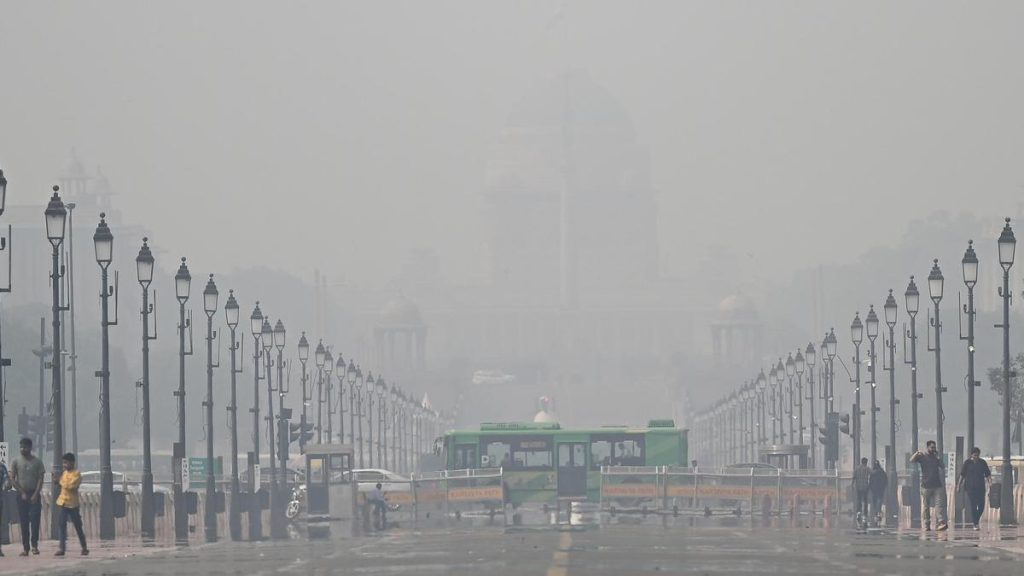
Forty-eight hours before Deepavali, amidst the rising crescendo of crackers heralding the festivities, a Supreme Court Bench headed by Chief Justice of India Surya Kant said the people, and not the judiciary, must strike a blow against air pollution in the national capital.
Instead, the court went beyond Deepavali to highlight a consistent danger that sustains and would worsen the toxic air: vehicular emissions. The court wanted to know about measures to regulate traffic originating from outside the national capital. These include steps taken to identify, monitor, and regulate vehicles that do not conform to prescribed emission standards, and measures to prevent the entry and operation of overage, end-of-life, or non-compliant vehicles. “We direct the concerned agencies, particularly, the MCD, to submit their immediate response as to why these measures be not implemented without any delay.
On November 6, the court detected a sharp increase in issues attributable to vehicular emissions. Incidentally, two separate orders of the Supreme Court passed several months ago, on January 21 and February 23 this year, had contained detailed long-term and short-term measures recommended by the Commission for Air Quality Management (CAQM) to mitigate air pollution, especially caused by vehicular emissions, in Delhi. Once again, we clarify that no objections will be entertained against the recommendations made by the CAQM,” the court had made its intent clear on January 21.
“It must be borne in mind that Delhi and the National Capital Region (NCR), by virtue of their geographical and economic interconnectedness, bear the cumulative burden of vehicular traffic originating not merely within their own boundaries but also from the neighbouring States of Uttar Pradesh, Haryana and Rajasthan,” the Supreme Court reminded the authorities in its latest order. The issue warranted urgent and immediate intervention, the court said, directing the Municipal Corporation of Delhi (MCD), the Delhi government, the Delhi Police (Traffic department), as well as the neighbouring States of Haryana, Rajasthan, and Uttar Pradesh to file their responses on what they have done to regulate in the national capital the entry and plying of commercial and non-commercial vehicles. The court has asked if the authorities have any “further short-term and long-term measures proposed or contemplated to mitigate vehicular emissions and reduce their contribution to the deteriorating air quality in Delhi and the National Capital Region”.
