
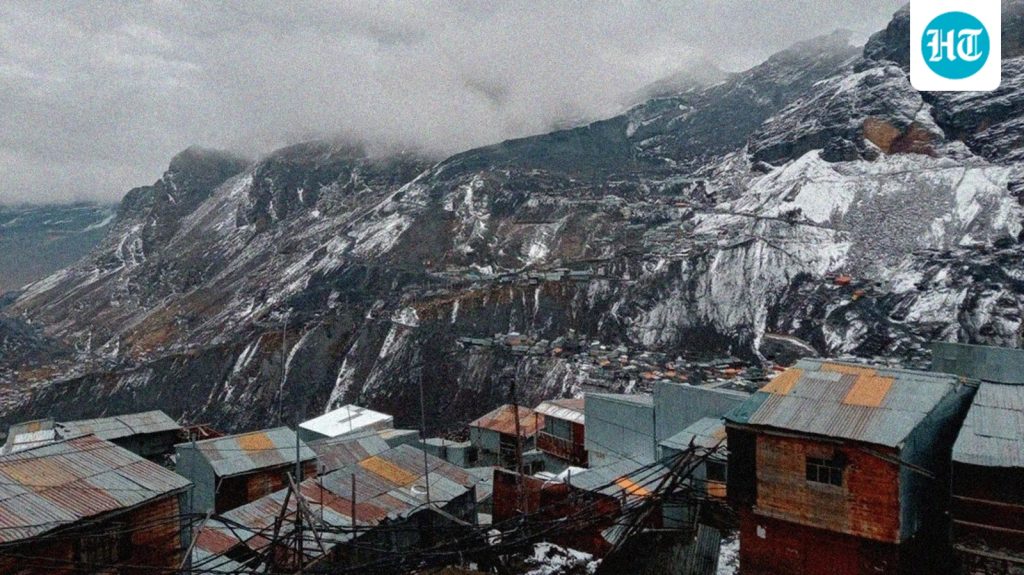
We all have that one friend who wants to travel everywhere. Machu Picchu? Booked. The Amazon? Packed. A random town in Peru that is closer to the sky than to sea level? They would say, “That sounds amazing. Only, it is not. Or at least, not in the way Instagram makes ‘amazing’ look. Also read | No red light, no green light, just hand signals: Thimphu is the only capital city on Earth that has no traffic lights at all
Despite poor working and living conditions, NASA reported that the population boomed in the 2000s as the market price of gold rose. It sits on the side of Mount Ananea and below a glacier called La Bella Durmiente, meaning ‘Sleeping Beauty’, per NASA. That is the infrastructure reality of a settlement built for extraction, not for habitation. The thin air is not just uncomfortable, either. NASA noted that each breath draws in half as much oxygen as at sea level. That oxygen-poor environment can lead to chronic mountain sickness, or CMS, with symptoms including dizziness, headaches, ringing ears, palpitations, and even heart failure and death, NASA added. Researchers estimate one in four people in La Rinconada suffer from CMS. It is also why researchers travel there — not as tourists, but to study the short-term and long-term effects of oxygen-poor conditions on humans. Peru remains a major draw for travellers, famous for natural and archaeological wonders, including the Incan ruins of Machu Picchu, which attract hundreds of thousands of visitors every year. But not every high-altitude curiosity is a destination.
In a 2019 article , NASA’s Science Mission called La Rinconada ‘the highest settlement in the world’ and published a natural-colour image taken on August 1, 2019, by the Operational Land Imager on Landsat 8. NASA placed the town in the eastern Andes Mountains, about 5,000 metres — roughly 3 miles or 4.8 km — above sea level, in southeastern Peru, around 650 kilometres (400 miles or 643.7 km) from the Bolivian border. From 2000 to 2009, the population of La Rinconada reportedly increased by 230 percent, and electricity was finally installed in the 2000s. Also read | Bicycles outnumber cars roughly 5:1 in Copenhagen, making it one of the most bike-friendly cities That is not a metaphor for a rough-around-the-edges destination.
Residents, NASA said, either burn or bury their trash outside city limits.
Yet 50,000 people live here amidst the thin air for one valuable resource: gold.” Then, NASA shared the line that will stop most travel fantasies cold: “The Peruvian town does not have running water, a sewage system, or garbage disposal.
