
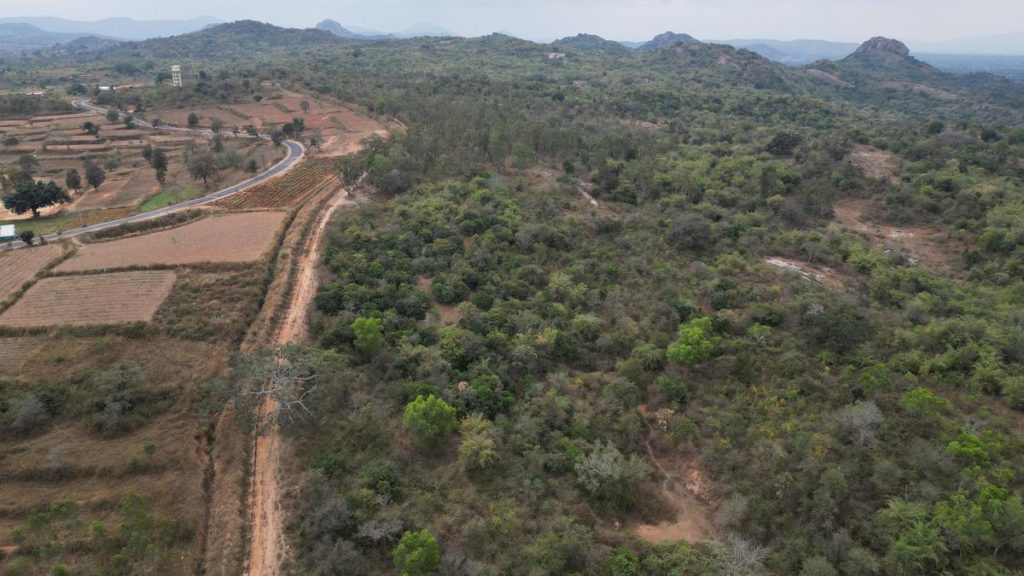
The Supreme Court has made it clear that commercial crop cultivation within reserve forest areas is not protected under the Forest Rights Act (FRA), 2006.
The court has distinguished commercial cultivators and plantation owners from forest-dwelling Scheduled Tribes and Other Traditional Forest Dwellers, who have lived in forests for generations and depend on them for livelihood. A Bench of Justices Vikram Nath and Sandeep Mehta recorded the court’s view in an order concerning extensive silk cotton cultivation within the reserve forests of the Agasthyamalai Biosphere Reserve. The court did not accept the Tamil Nadu government’s claim that the cultivation of silk cotton justified the presence of the cultivators in the forest area.
Their rights are protected under the Scheduled Tribes and Other Traditional Forest Dwellers (Recognition of Forest Rights) Act, 2006, commonly known as the FRA. The court, in its November 6 order, directed the Central Empowered Committee to examine the Tamil Nadu government’s opinion that silk cotton was a ‘minor forest produce’. Presently, 3,637.83 hectares of the 5,072.64 hectares of forest land are under silk cotton cultivation.
“What emerges from the government affidavits is the promotion and sponsored cultivation of silk cotton as a commercial crop… The concept of planned cultivation of commercial crops is totally contrary to the very concept of a naturally occurring minor forest produce,” the apex court noted.

