
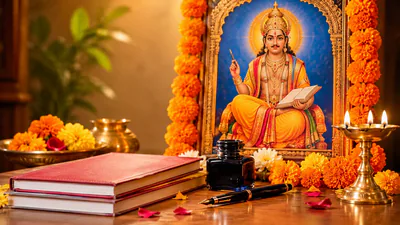
Bhai Dooj is usually associated with sisters putting a tilak on their brothers’ foreheads and praying for their well-being. But in many Kayastha households, the day also involves another ritual. The practice reflects the community’s traditional association with writing, learning and record-keeping.
Families observe Chitragupta Puja, or Kalam-Dawat Puja, by placing pens, inkpots and account books before the deity.
Chitragupta is particularly revered by the Kayastha community, which has traditionally been associated with writing, record-keeping and administrative work. He is regarded as the community’s ancestral deity. Incredible India’s account of the Adi Chitragupt Mandir in Patna describes him as the divine scribe who records human virtues and sins. The Adi Chitragupt Mandir in Patna , also known as Kayastha Dham, is an important place of worship for the community. Incredible India notes that devotees visit the temple on Yam Dwitiya to seek blessings from their revered deity. (Also Read: Know Your Neighbourhood: How Bengaluru’s Fraser Town got its name ) While Bhai Dooj is largely celebrated as a festival honouring the bond between siblings, Kayastha families also mark the day with Chitragupta Puja. The practice of worshipping pens, inkpots and account books reflects the community’s long-standing association with writing and record-keeping.
