
However, whether such a disaster could occur, and if at all it will, remains an open scientific question.
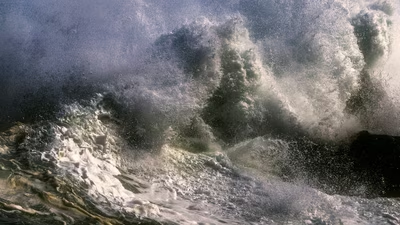
A massive “megatsunami” could wipe out the US East Coast within hours as an unstable island volcano in Spain’s Canary Islands could splinter and fall into the sea, a scientist has warned, according to the New York Post.
The wave, if generated, would travel at jetliner speeds. The collapse, on the other hand, may not occur for centuries or even millennia.
Volcanologist Professor Bill McGuire has been monitoring Cumbre Vieja, a volcano that has the potential to create a deadly transatlantic tsunami, according to an article he published in BBC Science Focus . The increasing concern centers on a huge wall of rock, also known as a “flank”. McGuire said that the flank is moving toward the sea that would displace a biblical amount of water, should it collapse. However, experts have said that an Atlantic catastrophe is not expected to occur immediately. “I have no doubt this will be a cataclysmic event, but have no idea when it will happen — it could easily be centuries or even millennia down the line,” McGuire said.
In the worst-case scenario, waves can rise up to 65 feet high and reach the Eastern Seaboard within nine hours in case a flank collapses, according to McGuire’s computer simulations. “There has been huge debate and discussion, sometimes quite heated, about the level of expected destruction, and — in particular — whether devastating waves will reach the coast of North America . Researchers, to support the potential of such waves, point to huge, out-of-place boulders deposited along coastlines in the Bahamas. They believe this left physical evidence that the effects of flank collapses can reach across the ocean.
“Based on extensive studies, I expect this part of the flank will eventually crash into the North Atlantic, launching a megatsunami in the process,” he wrote. Prehistoric Canary Island tsunamis carried those rocks across the Atlantic, according to geologists.
