
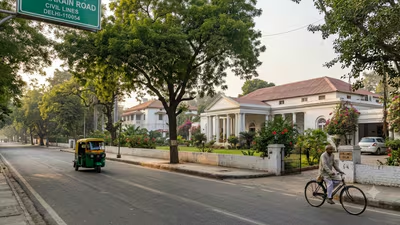
Today, Civil Lines is known for its wide roads, green spaces and colonial-era buildings. Long before Delhi’s southern neighbourhoods became the focus of urban expansion, the area north of the Walled City had emerged as an important centre of British life and administration. But its name offers a clue to a time when the British were shaping a separate residential and administrative landscape outside Shahjahanabad.
The development of this settlement can be traced through the history of Ludlow Castle, one of its most prominent buildings. The neighbourhood also witnessed the expansion of British residential life. Bungalows, gardens and institutional buildings became defining features of the area. The old Ludlow Castle building no longer stands, but its name survives in Ludlow Castle Road. The neighbourhood’s history is also part of a wider story of British expansion beyond Shahjahanabad. Research published in British Houses in Late Mughal Delhi traces how British officials established new residential enclaves outside the old city.
The British East India Company appointed a Resident at the Mughal court in 1803, according to the Delhi Lieutenant Governor’s official website. A suitable residence was eventually found in Ludlow Castle, a large house built in 1813 for Samuel Ludlow, a surgeon who served the British community in Delhi. After Ludlow was transferred in 1831, the house was rented by the British administration. From 1832 to 1857, it served as the Delhi Residency, housing the office and residence of the British political representative at the Mughal court. Historian Swapna Liddle has discussed the changing role of Ludlow Castle, including its use as the British Delhi Club after 1857, in a report by The Indian Express.
