
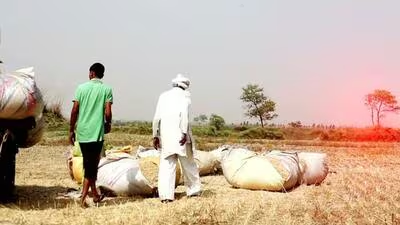
Reena Kumari, a paddy farmer in Uttar Pradesh’s Badaun district, has harvested less than half her usual crop this season. But even the paddy she managed to save from October’s untimely rain and storms has yet to bring her much-needed income, as traders delay purchases.
Her experience reflects the financial bind facing small farmers as weather-related disruptions to the kharif harvest coincide with preparations for the rabi season. A damaged crop means less produce to sell, while delays in procurement and private purchases further squeeze farmers’ cash flow. The pressure comes as the winter sowing season gets underway.
In Badaun, the modal price of common paddy was around ₹ 3,300 per quintal, or ₹ 33 per kg, on November 4, according to mandi price data sourced from Agmarknet. The total area sown under rabi crops in the country stood at 3.76 million hectares as of October 30, down from 6.90 million hectares during the corresponding period last year, according to data released by the Union agriculture ministry. Uttar Pradesh, one of the country’s major mustard-producing states, had recorded rapeseed and mustard sowing over 1.04 million hectares by October 30, against 1.33 million hectares during the same period last year, according to data from the agriculture ministry’s UPAg portal.
The total area sown under rabi crops in the country stood at 3.76 million hectares as of October 30, down 46% from 6.90 million hectares during the corresponding period last year, according to data released by the Union agriculture ministry. Uttar Pradesh, one of the country’s major mustard-producing states, had recorded rapeseed and mustard sowing over 1.04 million hectares by October 30, against 1.33 million hectares during the same period last year, a decline of 22%, according to data from the agriculture ministry’s UPAg portal. For Kumari, the squeeze is both agricultural and financial. Along with concerns over soil moisture following a deficient monsoon, high daytime temperatures and limited irrigation availability in some regions, she is struggling to arrange money for the next crop. The pressure comes as the winter sowing season gets underway.
