
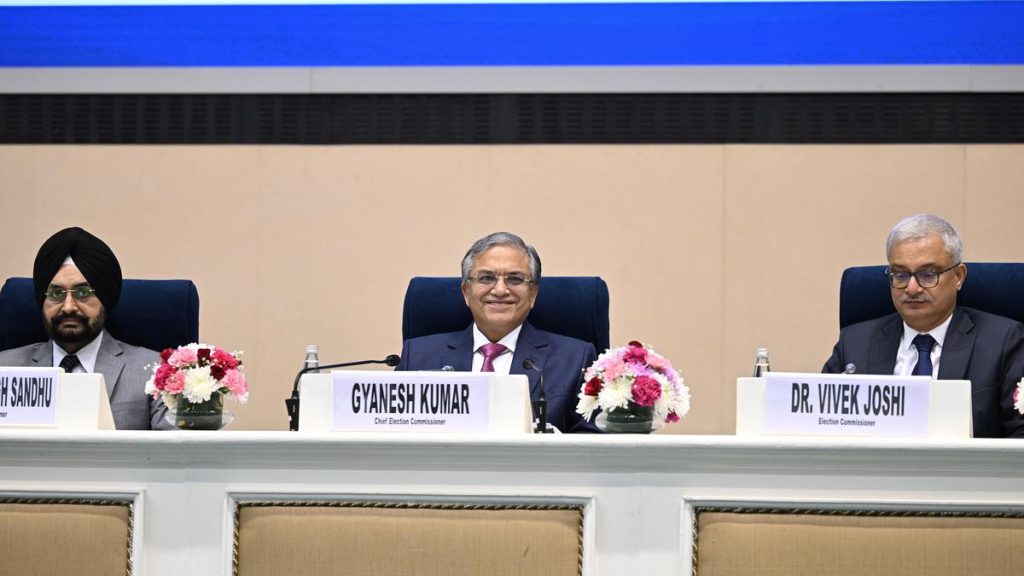
The Supreme Court on Wednesday (November 4, 2026) sought a response from the Union government on petitions challenging the constitutionality of a specific provision in the Chief Election Commissioner-Election Commissioners’ appointment law which grants them blanket, lifelong immunity from any legal action or criminal prosecution, not only during the official tenure but even after retirement.
A Bench headed by Chief Justice of India Surya Kant issued notice to both the Centre and the Election Commission of India on petitions filed by RJD MP Manoj Jha, represented by Tanya Srivastava and advocate Arun Kumar Agrawal, represented by advocate Neha Rathi, challenging Section 16 of The Chief Election Commissioner And Other Election Commissioners (Appointment, Conditions Of Service And Term Of Office) Act, 2023. They said that until the enactment of the 2023 Act, the Parliament had not granted any blanket immunity to Election Commissioners. The petitions noted that under Article 361 of the Constitution, the President and the Governors of States enjoy express constitutional immunity for acts done in performance of their official powers and duties. “However, even their immunity is not absolute and Article 361 bars criminal proceedings against the President and the Governors only during the term of office and permits civil proceedings after notice.
Ms. “Despite the absence of such blanket immunity, the Election Commission has successfully conducted elections over several decades. This shows that the Commission can function effectively without granting its members blanket immunity from legal proceedings,” Ms. Rathi submitted. Judges of the constitutional courts also do not enjoy an absolute immunity from civil or criminal proceedings,” the petitioners submitted.
The petitions said the Section was unconstitutional, went beyond the ambit of powers given to the Election Commission of India (EC) and, significantly, violated the Basic Structure of the Constitution. Rathi submitted that a plain reading of the provision showed a bar on any court to entertain or continue any civil or criminal proceedings against “any person who is or was a Chief Election Commissioner or an Election Commissioner for any act, thing or word, committed, done or spoken by him when, or in the course of acting or purporting to act in the discharge of his official duty or function”.
