
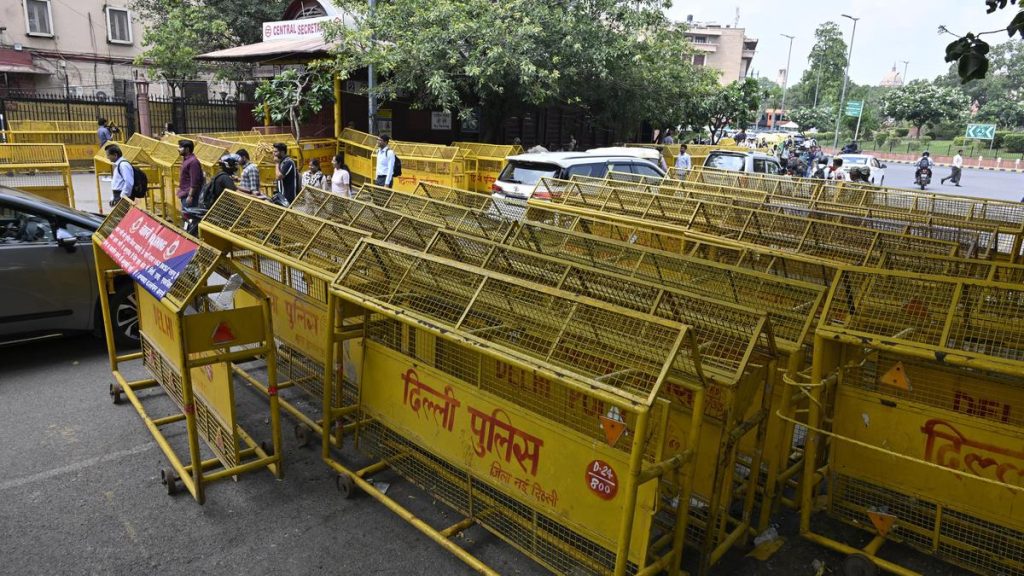
Seven separate prohibitive orders passed by the Delhi Police under Section 163 Bharatiya Nagarik Duraksha Sanhita (BNSS) in the national capital show restrictions concerning free movement were imposed way before protests erupted demanding the resignation of Chief Election Commissioner (CEC) Gyanesh Kumar.
The seven orders comprise the police sub-divisions of Connaught Place, Tughlak Road, Parliament Street, Chanakya Puri — where the Prime Minister’s residence, Rashtrapati Bhavan, foreign embassies, and other vital installations are located — Barakhamba Road, Safdarjung Enclave in south-west Delhi, and Defence Colony. ALSO WATCH Watch: Anti-CEC protest fallout: Supreme Court issues fresh directions to Centre, Delhi Police The orders prohibited activities, including the holding of any public meeting, shouting of slogans, making speeches, picketing or dharnas, assembly of five or more persons, carrying fire arms, banners, placards, lathis, spears, swords, sticks, brickbats, etc. This had led the Supreme Court to direct the Delhi Police to place on record the specific prohibitive orders.
The prohibitive orders are for a maximum period of 60 days, till the latter half of October.
They are ex-parte or without hearing any objections, saying “notice cannot be served individually on all concerned”. The orders, which are part of an affidavit filed by Delhi Police Commissioner Anurag Kumar in the Supreme Court, said “reports have been received indicate that such conditions now exists that unrestricted holding of public meetings, processions/demonstrations, etc, in the area are likely to cause obstruction to traffic, danger to human safety and disturbance of public tranquility”. The police reasoned in the orders that it was necessary to take “speedy measures” to “prevent danger to human life or safety and disturbance to public tranquility”.

