
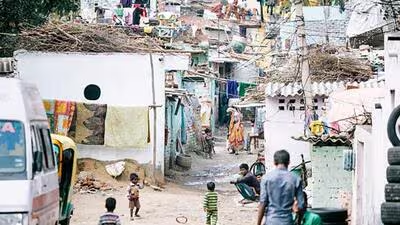
After notifying its new slum rehabilitation policy, which adopts a Public-Private Partnership (PPP) model for in-situ redevelopment, the Delhi government has initiated the process for the redevelopment of 17 slum settlements in Seelampur, Sultanpuri and Lajpat Nagar. The settlements, spread across the three locations, comprise a total of 4,870 shanties, for which the government plans to develop three high-rise residential colonies.
How the PPP policy will work
The feasibility study is expected to be completed within four months, following which the government will begin further planning for the projects. Under the Delhi Slum and Jhuggi Jhopri Rehabilitation and Relocation Policy, 2026, private developers will be allowed to construct rehabilitation housing for eligible slum residents in exchange for development rights over commercially valuable portions of the land. The policy seeks to make redevelopment financially viable through mixed-use development and greater private-sector participation, marking a departure from the 2015 policy, under which the government remained the principal implementing agency.
A government official said that bids have been invited for these three areas to appoint transaction advisors for the selection of a developer for in-situ rehabilitation of Jhuggi Jhopri (JJ) Clusters. A DUSIB official said the proposed redevelopment would follow the model adopted for earlier PPP-based projects in the city. The proposed projects in Seelampur, Sultanpuri and Lajpat Nagar will similarly seek to consolidate multiple JJ settlements into three integrated high-rise residential colonies, officials said.
