
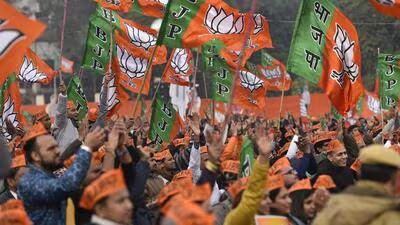
The Bharatiya Janata Party (BJP) retained six MLC seats in Uttar Pradesh (UP) in the recent polls but its loss of two seats in Varanasi and one in Lucknow reflects the brewing angst of the upper caste community against the party.
Yet Kanti Singh, a Kurmi, won the Lucknow seat. A union minister recently expressed confidence in managing the upper caste community, particularly the Brahmins’ anger over the controversial UGC amendment, in a private chat. Publicly, the BJP has downplayed the contentious issue. Union ministers JP Nadda and Jitendra Singh met a high-profile delegation of general category groups in mid-September, who demanded a complete rollback of the UGC amendment. Though the government bought three weeks’ time to study the demands, the issue continues to be a source of discontent against the BJP, alienating its core voters that comprise Vaishya, Brahmin and Rajputs. As for the NDA, the results have demonstrated the weakness of the allies — Suheldev Bharatiya Samaj Party of Om Prakash Rajbhar, Nishad party of Sanjay Nishad, both ministers in the Yogi government and Apna Dal (Sonelal) of Anupriya Patel, a minister in the central government. Incidentally, the BJP has an overwhelming presence in the UP assembly, Rajya Sabha and the state cabinet from Agra and Aligarh. Yogendra Upadhaya, the higher education minister, is from Agra and basic education minister Sandeep Singh grandson of BJP’s stalwart, late Kalyan Singh, is from Aligarh. Yet, the BJP failed to win the seat. In its bid to win over non-Yadav backwards, mainly Kurmis and Lodhs, the BJP had given prominent positions to Kurmis in both the party organisation and government even though the Apna Dal, its ally, is a Kurmi-based party. State BJP chief Pankaj Choudhary is a Kurmi. Kalyan Singh and his family remain the biggest Lodh leaders.
But the election results confirm the palpable fear in the party that this issue could significantly impact the forthcoming 2027 assembly elections. In January 2026, the central government notified the University Grants Commission’s (Promotion of Equity in Higher Education Institutions) Regulations, 2026 to prevent caste-based discrimination in higher education, mandating equity committees and monitoring teams comprising members from SC/ST and OBC communities. Because of round-the-year training and deployment at various government functions — tilted the scales against the BJP, besides the UGC amendments, several local issues — unemployment, old pension scheme, over-worked school teachers.
