
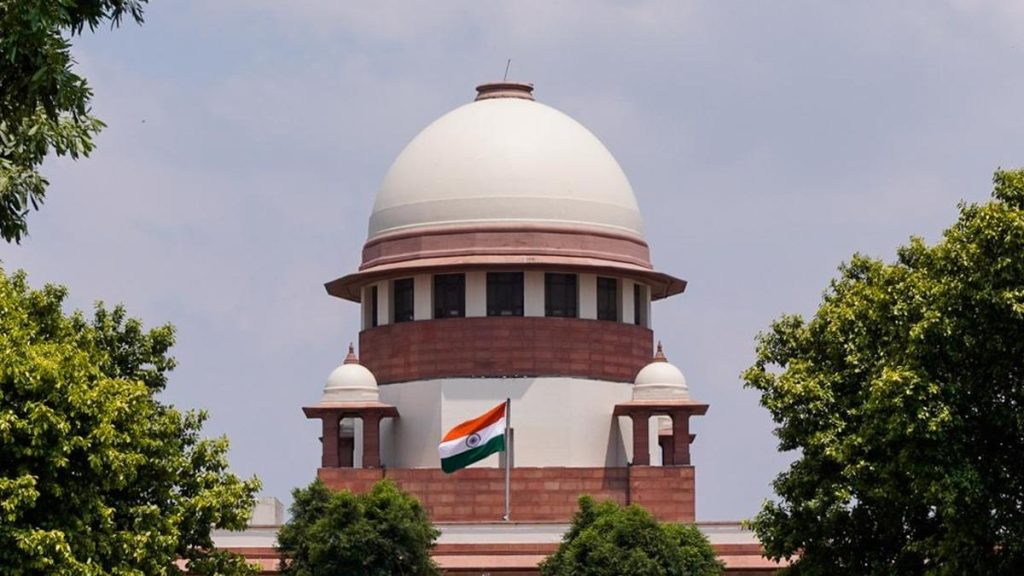
The Supreme Court on Monday (November 2, 2026) dismissed the Union government’s challenge to a Delhi High Court order allowing mining major Vedanta Ltd. and Ravva Oil (Singapore) Pte. Ltd. to enforce foreign arbitration awards involving claims of nearly $99 million. The court questioned the Centre’s resistance to the enforcement of the awards, warning such delays could undermine India’s standing as an arbitration hub.
The Centre challenged the award in Malaysia. Vedanta and Ravva Oil subsequently moved the Delhi High Court to enforce the awards in India. In July, the High Court rejected the objections, holding that enforcement proceedings could not be used to reopen the underlying dispute or reconsider the tribunal’s findings. It also held that the proceedings were within the limitation period and directed the release of the companies’ bank guarantees within eight weeks.
The Bench also took note of the prolonged nature of the dispute, pointing out that the first arbitral award was rendered in 2004, while the final award followed in 2016. It ultimately found no reason to interfere with the Delhi High Court’s July 1 judgment rejecting the Centre’s objections to the enforcement of the awards, which were passed by an arbitral tribunal seated in Kuala Lumpur, Malaysia. the decision was reversed on appeal and the award was ultimately upheld by the Malaysian Federal Court in 2011 Although it was set aside by the Kuala Lumpur High Court in 2009. In 2014, the government sought to recover about $64 million from Vedanta and $35 million from Ravva Oil. The companies contested the demands and returned to arbitration, with a reconstituted tribunal delivering its final award in October 2016. The Centre again challenged the award, but the Malaysian Federal Court upheld it in February 2019.
“We are of the view that no error, not to speak of any error of law, could be said to have been committed by the High Court in passing the impugned judgment and order,” the Bench said, dismissing the appeal.
The Centre opposed the plea on grounds including limitation, public policy and the tribunal becoming functus officio after passing the earlier award.
