
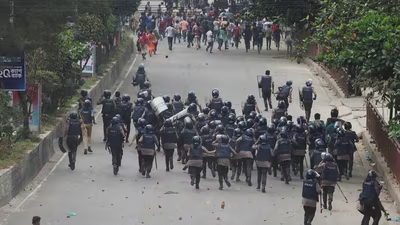
Bangladesh formed a new board on Sunday to review the minimum wage for garment workers, as authorities sought to quell protests that have disrupted key industrial hubs around Dhaka.
The garment sector is the backbone of Bangladesh’s export-driven economy, employing millions of workers and generating the bulk of the country’s foreign earnings. The new wage board includes representatives of the government, workers, and factory owners. Thousands of factories across the country produce clothing including T-shirts, jeans and sweaters for major retailers in Europe and the United States. The industry is also seeking to expand beyond its traditional markets, having recently secured greater access to Japan while exploring new export destinations as it competes with regional rivals such as Vietnam.
Workers currently earn about 13,000 taka ($106) a month, according to Kalpona Akhter of the Bangladesh Center for Workers Solidarity.
“For the last three days, we have been discussing this issue with labour leaders and factory owners,” labour minister Ariful Haque Choudhury said at a news conference in Dhaka. “A coterie seeking to destabilise the government and cause public suffering has been exploiting our workers,” he added, as he announced the new board and urged workers to return to factories. Labour leaders said their grievances extended beyond the creation of the board, citing inflation and rising household expenses. “This time we are demanding a bit more than 30,000 taka, considering inflation and the rising cost of living,” Akhter told AFP.
Despite the move, thousands of workers continued demonstrations in industrial areas around Dhaka on Sunday, leading to clashes with police who fired tear gas and sound grenades.
